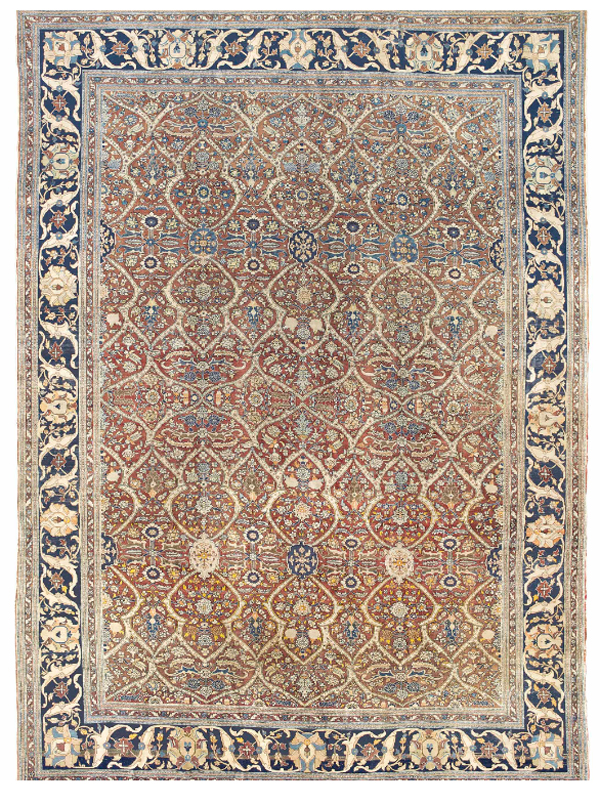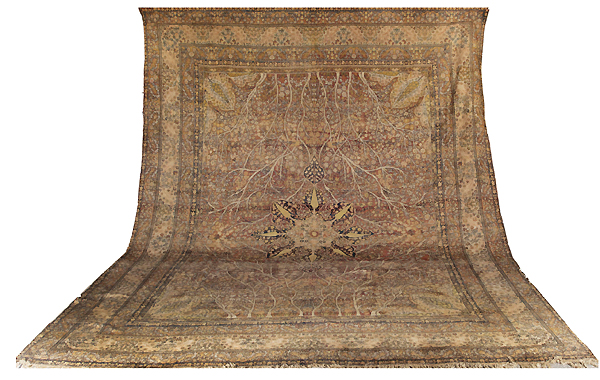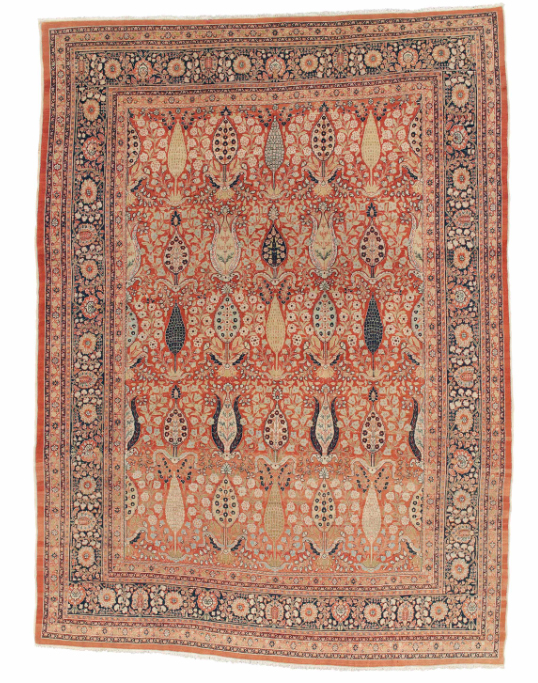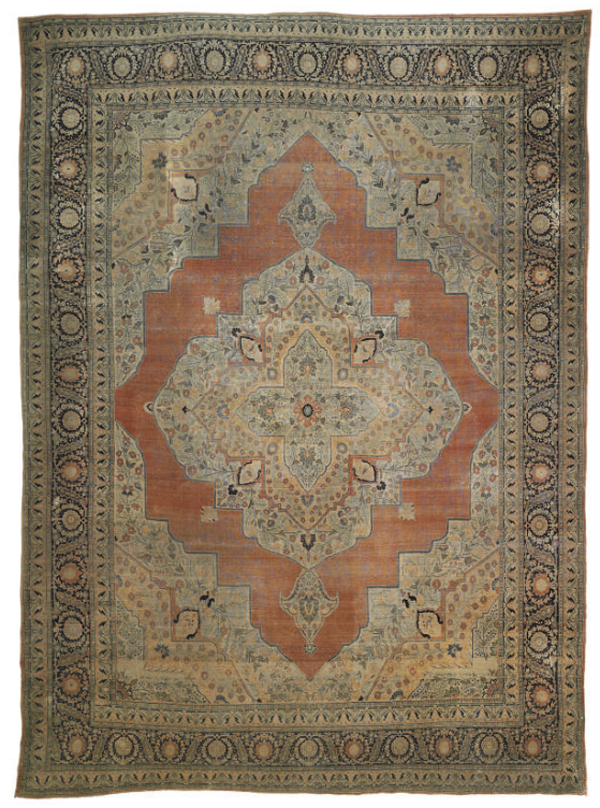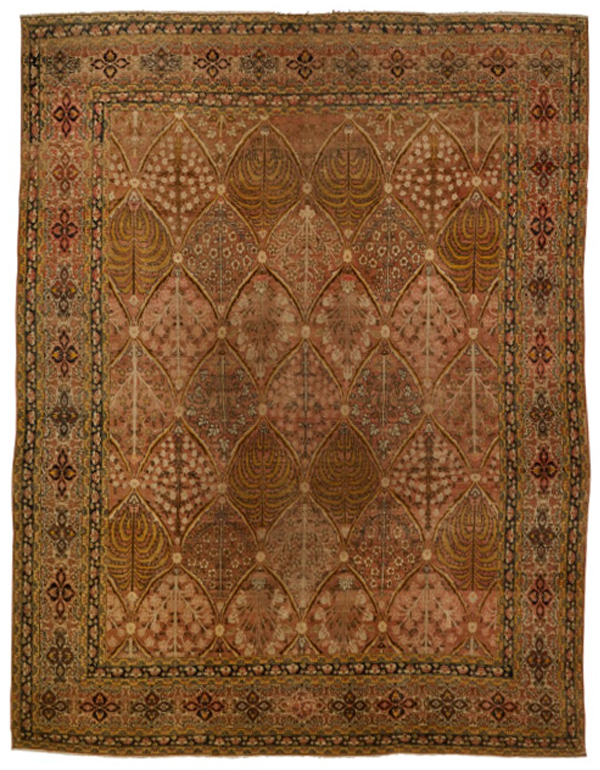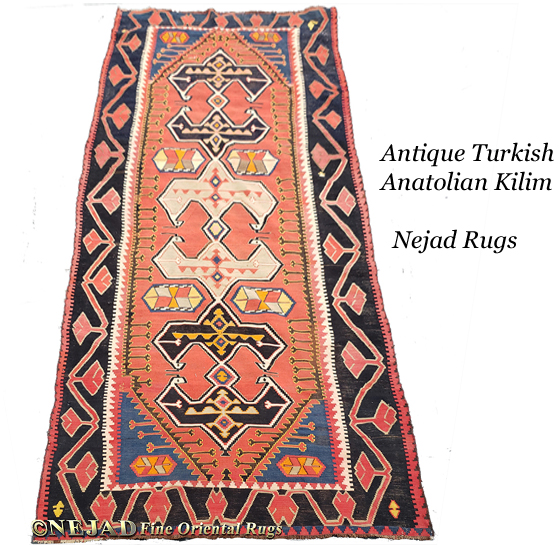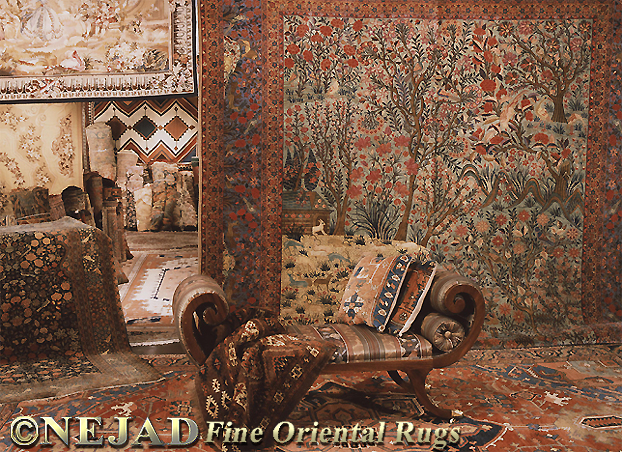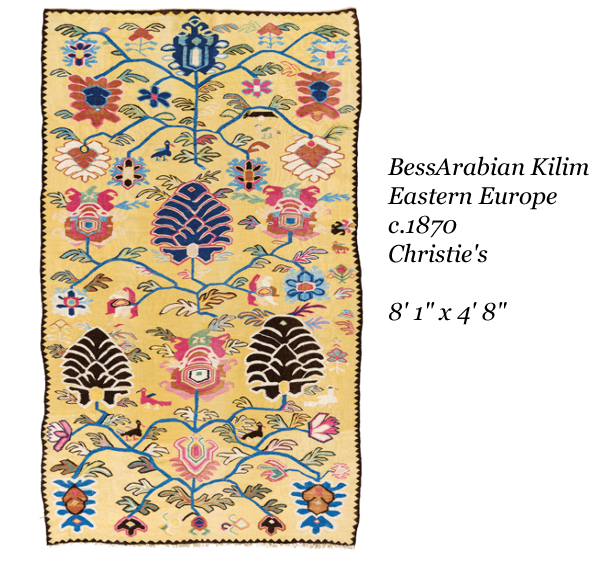
Nejad’s High-quality Hand-knotted 100% Wool pile Rugs with Geometric Design
Vermont, known for its captivating landscapes that change with the seasons, offers
a unique setting that demands equally exquisite home décor to match its natural
beauty. In the realm of interior design, one of the most effective ways to mirror
Vermont’s rustic charm and earthy tones is through the use of high-quality hand-
knotted wool rugs with geometric designs. These rugs not only enhance the aesthetic
of a home but also offer durability and functionality, making them a practical
choice for the wear and tear of everyday life.
The Essence of Vermont in Hand-Knotted Rugs
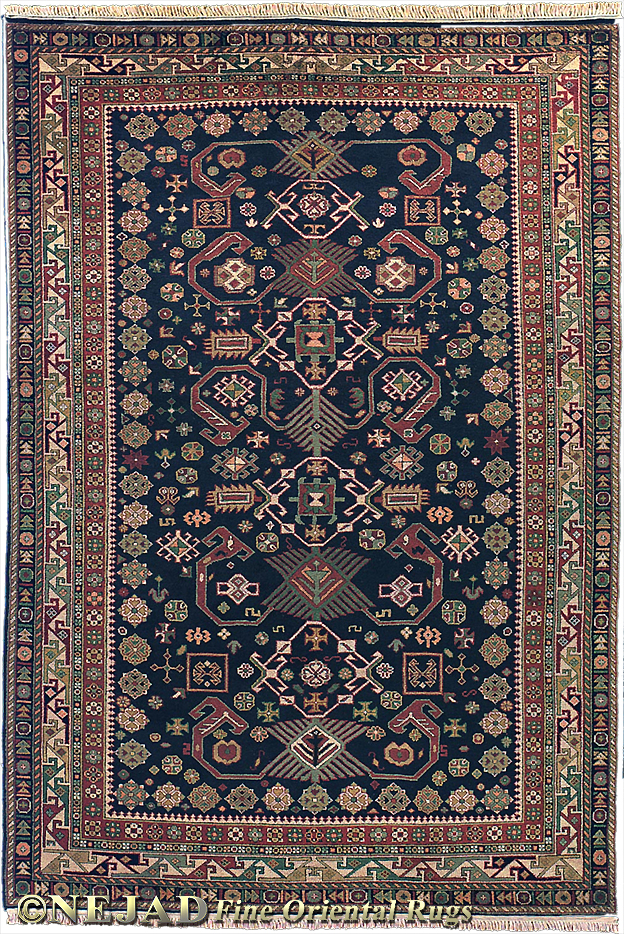
Rugs with Geometric Patterns in Earth Tones seamlessly blend with Rustic Decor
When choosing rugs for a Vermont home, it is crucial to consider designs that reflect
the state’s natural environment. Rugs with geometric patterns in earth tones
seamlessly blend with rustic decor, enhancing the room’s warmth and comfort. The
intricate patterns and rich, muted colors of these rugs draw inspiration from the
serene landscapes of Vermont, perfectly complementing wooden furniture and stone
fireplaces commonly found in local homes.
A Tale of Two Perfect Rugs: Nejad’s Creations in Woodstock, Vermont
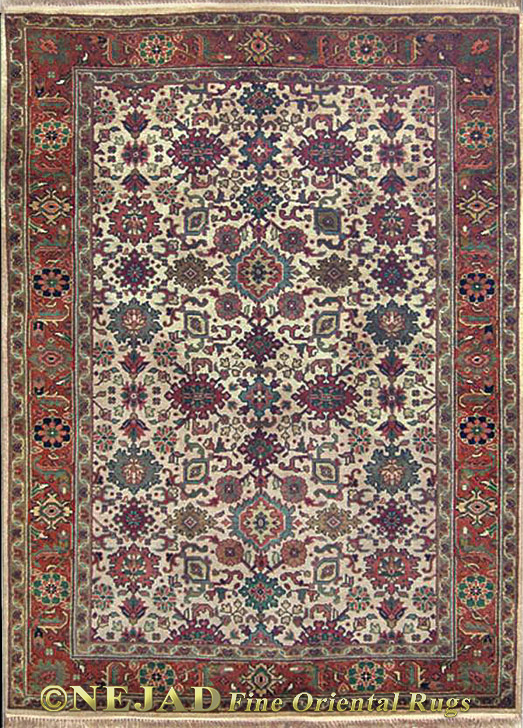
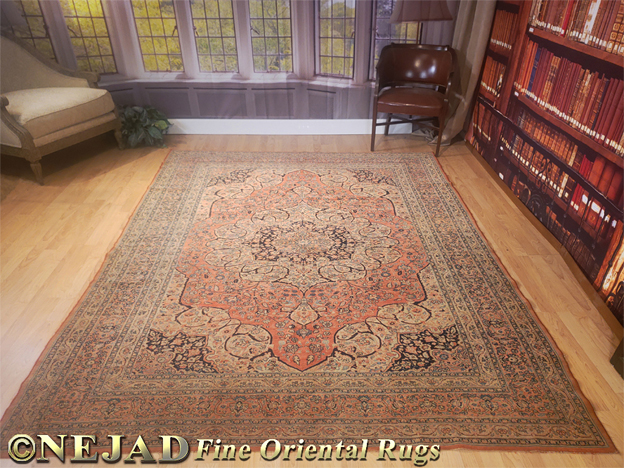
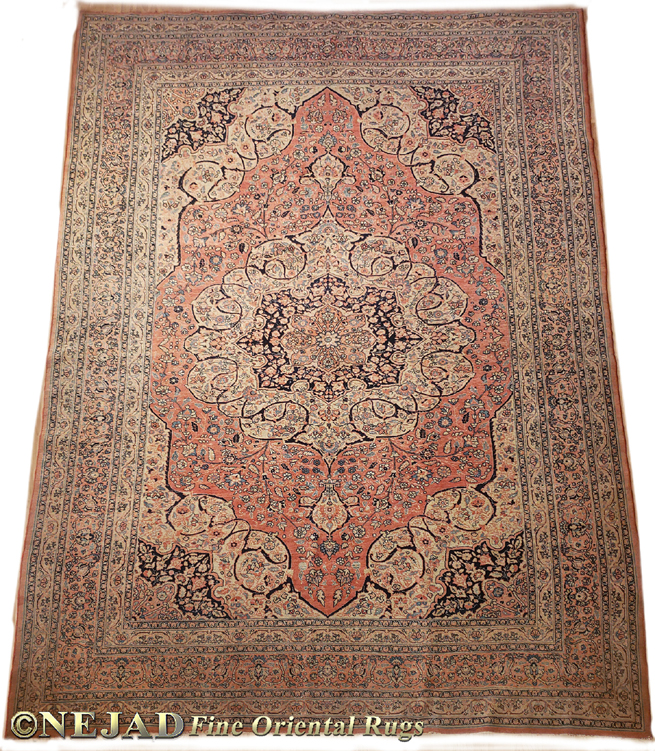
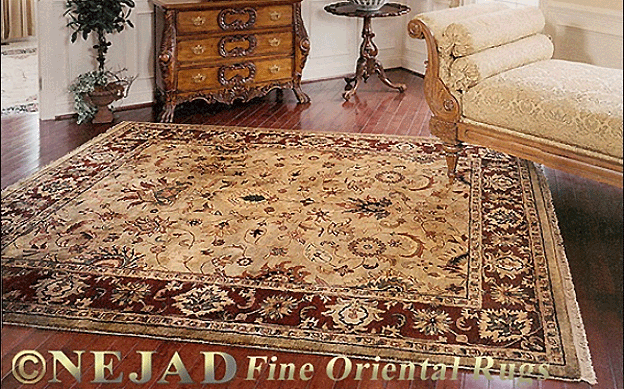
M006AIRT Rustic Mahal Rug from Nejad’s Signature Heirloom Collection
In Woodstock, Vermont, a town renowned for its lush terrain and vibrant seasonal
colors, a discerning couple found their perfect rug match through Nejad Rugs. With
over 40 years of experience, Nejad Rugs has honed the art of connecting clients
with pieces that resonate with their living spaces and aesthetic preferences.
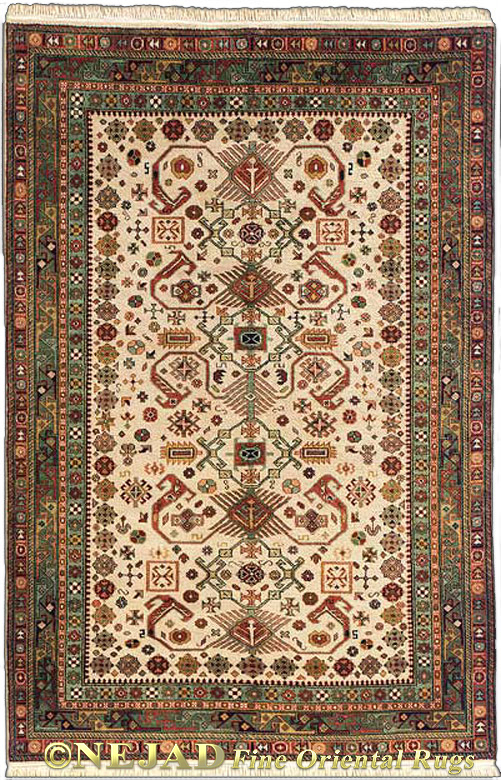
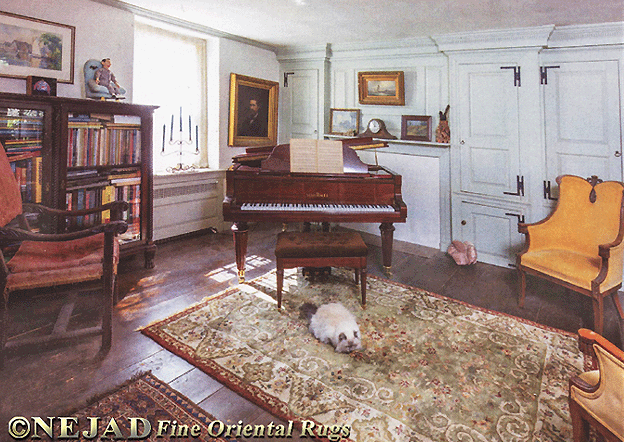
M007AIEM Pepperdil Rug from Nejad’s Signature Heirloom Collection
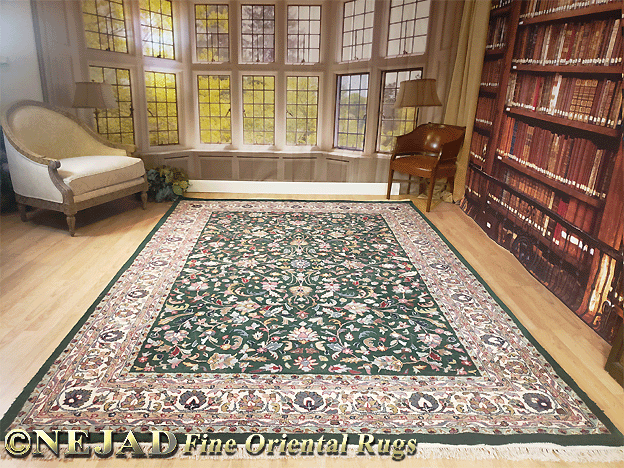
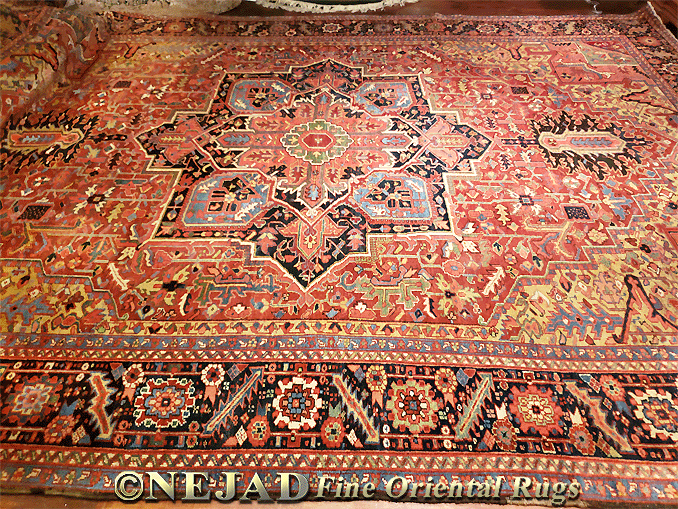
The clients first chose Nejad’s rug M006 Mahal in a 9’x12′ size, featuring a soft ivory
background and a rust border. This rug’s subtle yet inviting color scheme makes it a
versatile base for any room, reflecting the soft hues of Vermont’s early autumn. The
geometric patterns are understated, providing a sophisticated backdrop that doesn’t
overwhelm the space.
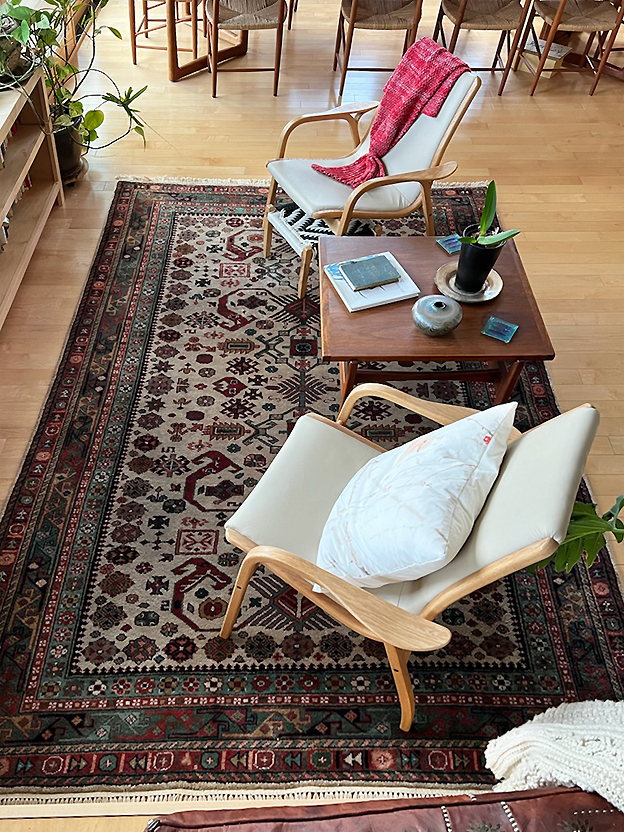
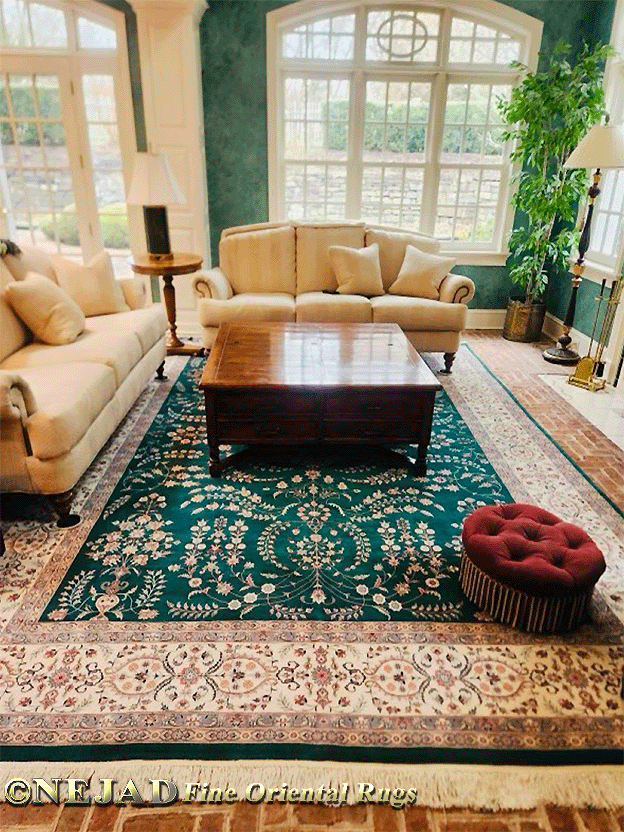
Rug features a rich green border evoking the verdant greenery of Vermont Summers
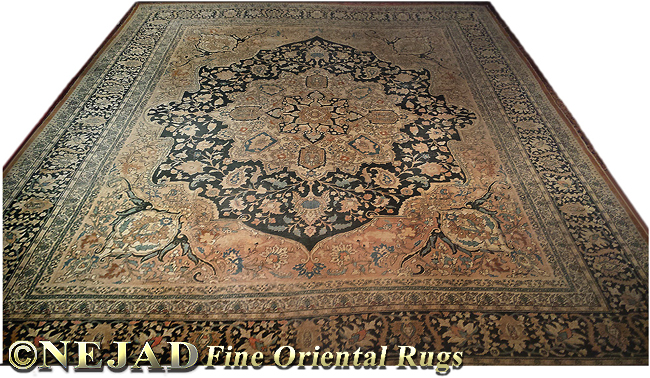
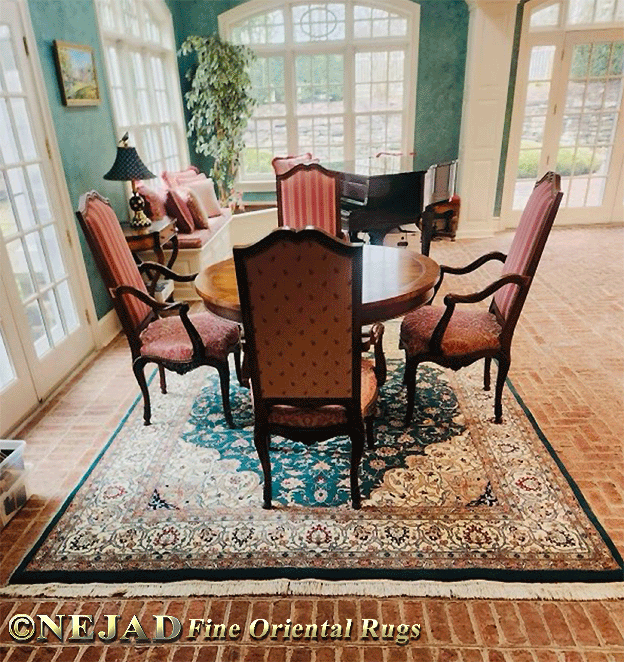
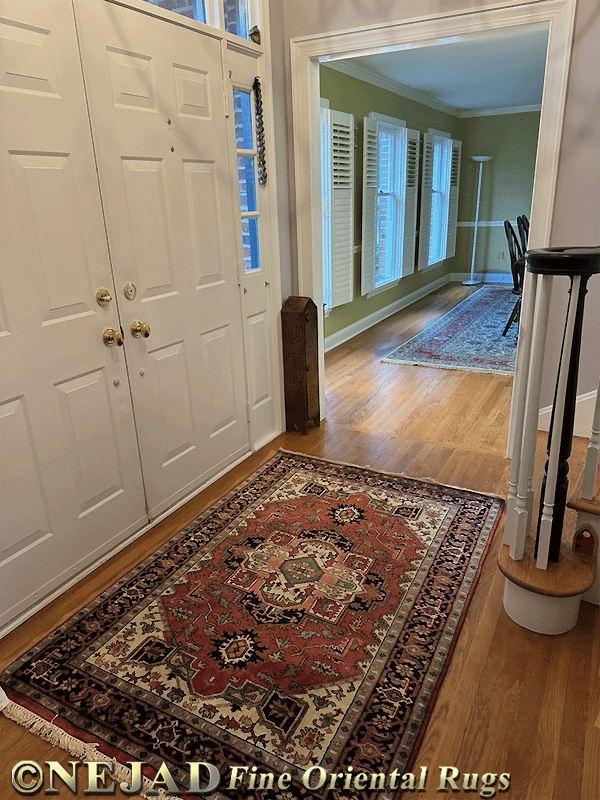
Complementing the Mahal, they selected Nejad’s M007 Pepperdil in a 6’x9’ size for their
living room, which shares the same high-quality weave and attention to detail. This rug
features an antique ivory background framed by a rich green border, evoking the
verdant greenery of Vermont’s summers. Together, these rugs create a cohesive look
throughout their home, maintaining a balance between elegance and the rustic charm
of their surroundings.

M007AIEM Pepperdil Hall Runner from Nejad’s Signature Heirloom Collection
Why Choose Nejad’s Hand-Knotted Wool Rugs?
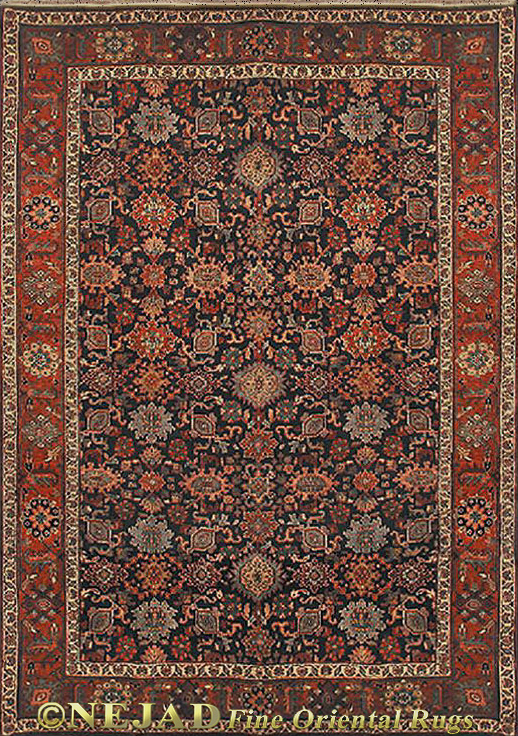
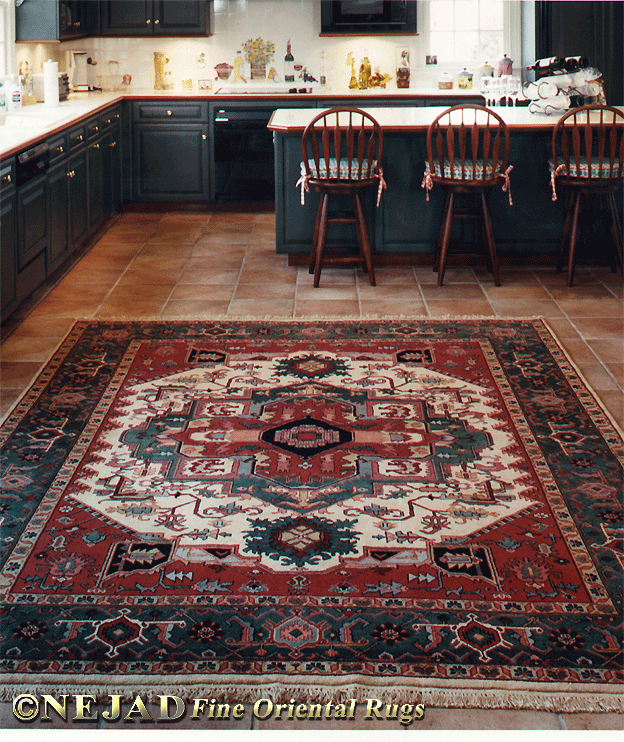
M006NYRT Rustic Mahal Rug from Nejad’s Signature Heirloom Collection
The choice of hand-knotted wool rugs is not just about aesthetics; it’s also about
investing in quality. Nejad’s rugs are known for their durability and ease of
maintenance, making them suitable for high traffic areas. Wool’s natural properties
also contribute to warmth and sound insulation, enhancing the comfort and tranquility
of a home.
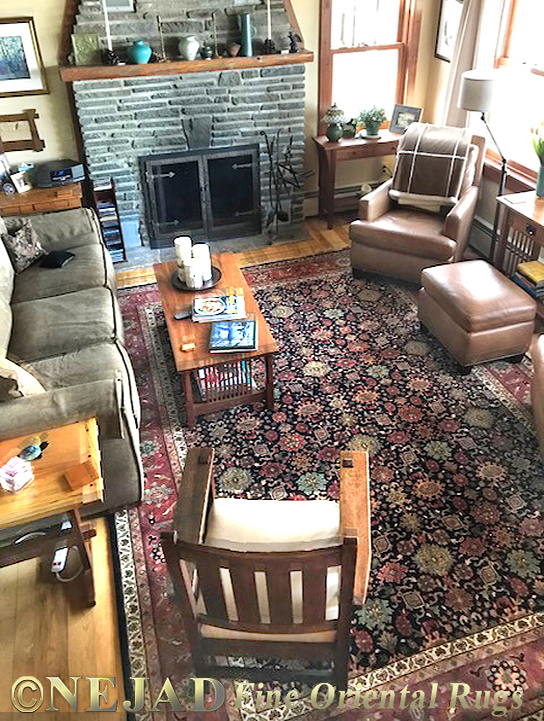
M006NYRT Rustic Mahal Rug from Nejad’s Signature Heirloom Collection
Moreover, wool rugs are eco-friendly, aligning with the values of many Vermont
residents who prioritize sustainability. The natural fibers are biodegradable
and sourced in ways that can be more environmentally conscious than synthetic
alternatives.
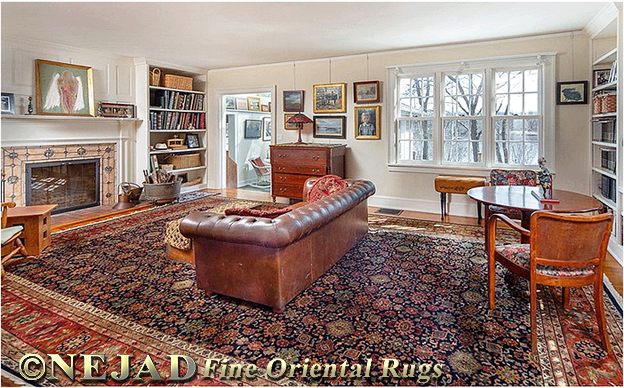
M006NYRT Rustic Mahal Rug from Nejad’s Signature Heirloom Collection
Conclusion
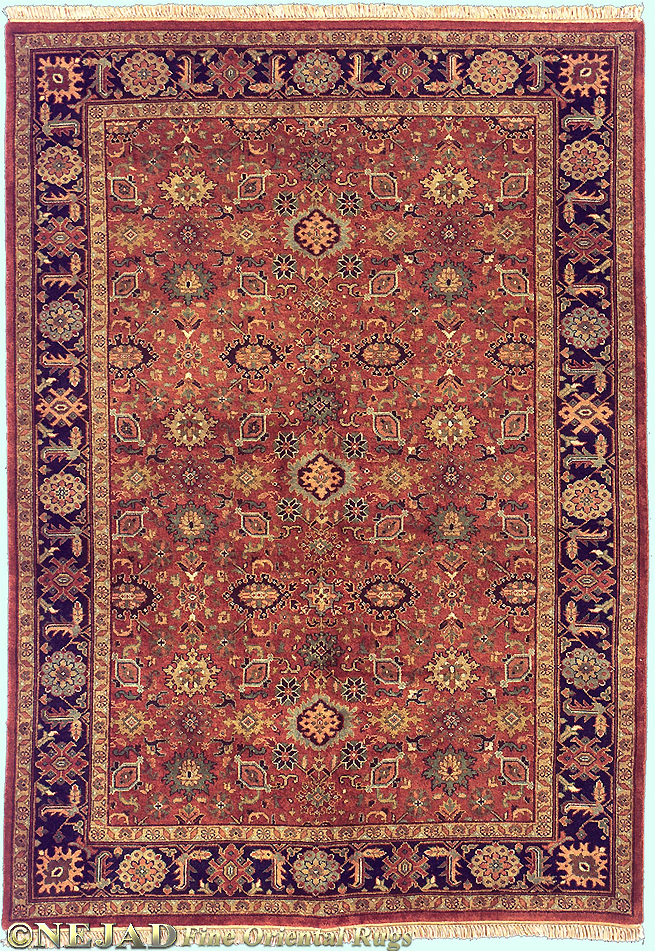
M006RTNY Rustic Mahal Rug from Nejad’s Signature Heirloom Collection
For those residing in or inspired by the picturesque settings of Vermont,
integrating hand-knotted wool rugs with geometric designs into your home decor
is not merely a style choice—it’s a lifestyle one. Nejad Rugs’ expertly crafted
pieces exemplify how a carefully chosen rug can transform a space, reflecting
both the external environment and the homeowners’ personal style. Whether you
reside in the bustling streets of Burlington or the secluded paths of Woodstock,
a Nejad rug can be the cornerstone that ties your home’s design to the natural
beauty of Vermont.
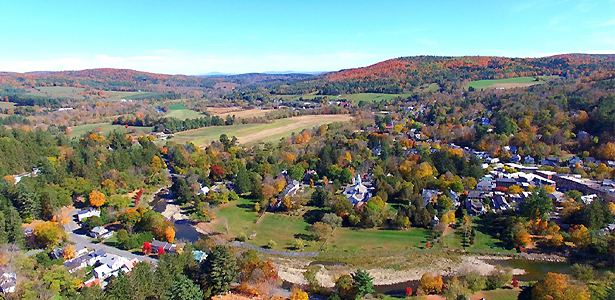
Woodstock, Vermont
Woodstock, Vermont
Woodstock, Vermont is the county seat of Windsor County with a population of just
over 3,000 – including the villages of Woodstock, South Woodstock, Taftsville,
and West Woodstock. It was named after Woodstock in Oxfordshire, England, as a
homage to both Blenheim Palace and its owner, George Spencer, 4th Duke of
Marlborough. The town was first settled in 1768 by James Sanderson and his family.
In 1776, Joab Hoisington built a gristmill, followed by a sawmill, on the south
branch of the Ottauquechee River. The town was incorporated in 1837.
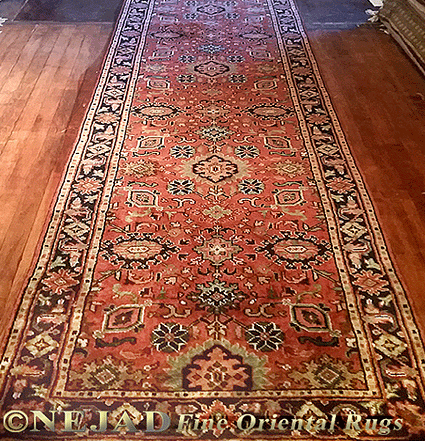
M006RTNY Rustic Mahal Hall Runner from Nejad’s Signature Heirloom Collection
Woodstock developed rapidly once the war ended in 1783. Factories made scythes and
axes,carding machines, and woolens. There was a machine shop and gunsmith shop.
Manufacturers also produced furniture, wooden wares, window sashes and blinds.
Carriages, horse harnesses, saddles, luggage trunks and leather goods were also
manufactured. By 1875, the Woodstock Railroad opened to White River Junction,
carrying freight and tourists.
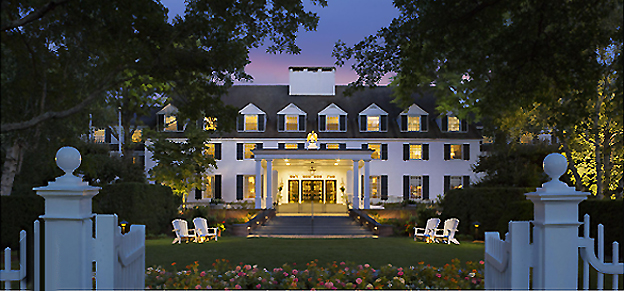
The Woodstock Inn – Originally opened in 1892
The economy is now largely driven by tourism – Woodstock has the 20th highest per-
capita income of Vermont towns. The seasonal presence of wealthy second-home
owners from cities such as Boston and New York has contributed to the town’s
economic vitality. The town’s central square, called the Green, is bordered by
restored late Georgian, Federal Style, and Greek Revival houses. The cost of real
estate in the district adjoining the Green is among the highest in the state.
Woodstock maintains a free community wi-fi internet service that covers most of
the village of Woodstock, dubbed “Wireless Woodstock”.
M007RTIY Pepperdil Rug from Nejad’s Signature Heirloom Collection
In his City Life: Urban Expectations in a New World, Canadian author and architect
Witold Rybczynski extensively analyzes the layout of the town and the informal and
unwritten rules which determined it. According to Rybczynski, the overall plan
seems to have been dictated by the site itself: a narrow, flat valley hemmed in by
the sweeping curve of the Ottauqueechee River on one side and a small creek on the
other. The green was laid out lengthwise on the narrow peninsula between the river
and the creek, allowing for many plots to have rear gardens running down to the
riverbank… This is a subtle sort of urban design, but it is design, design that
proceeds not from a predetermined master plan, but from the process of building
itself. Rybczynsk points out that there is no zoning in Woodstock, and “buildings
with different functions sat – and still sit today – side by side on the same
streets”, with practical exceptions such as the slaughterhouse and the gasworks.
M007NYIY Pepperdil Rug from Nejad’s Signature Heirloom Collection
The Rockefellers have had an enormous impact on the overall character of the town
as it exists today. They helped preserve the 19th century architecture and the
rural feel. In the late 1960s they tore down the landmark Woodstock Inn, a
Victorian treasure reconstructed in 1892 from the old Eagle Hotel, which served
as a center point for the town, and built a charming neo-colonial edifice farther
back from the street. Laurance and Mary French Rockefeller also had the village’s
power lines buried underground. To protect their ridgeline views, the town
adopted an ordinance creating a Scenic Ridgeline District in order to protect
the aesthetics and the views of the town. It was updated in 2007.
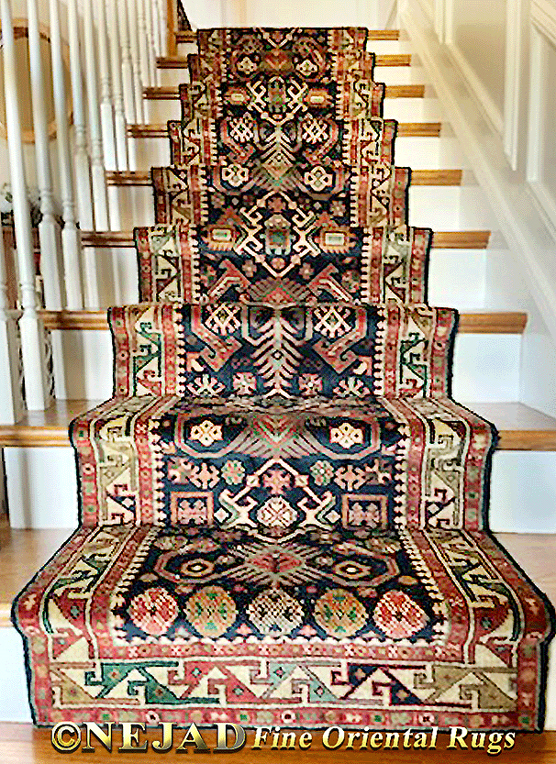
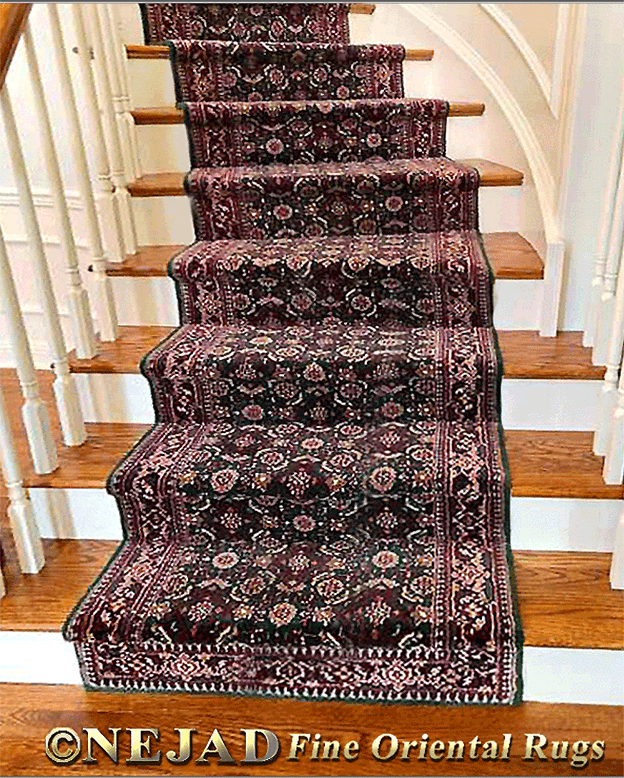
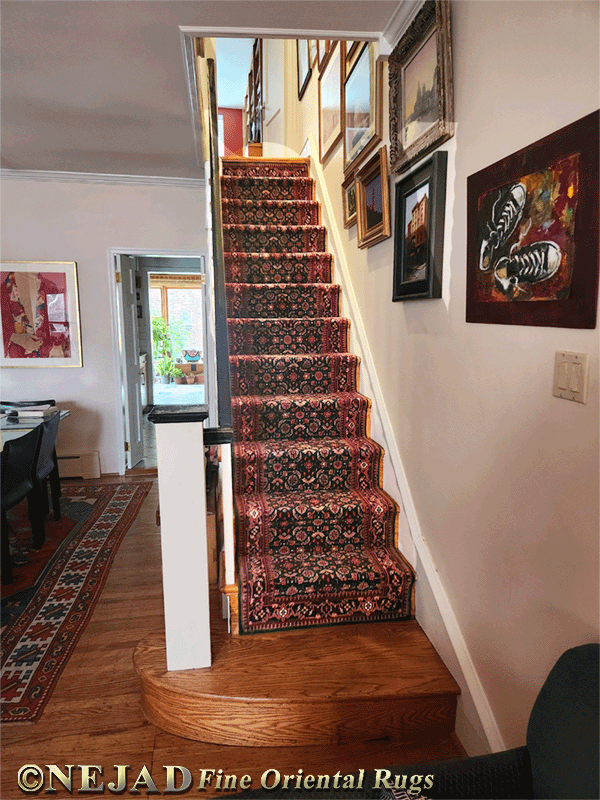
M007NYIY Pepperdil Stair Runner from Nejad’s Signature Heirloom Collection
Woodstock was named “The Prettiest Small Town in America” by the Ladies Home Journal
magazine, and in 2011, North and South Park Street and one block of Elm Street won
an award for great streetscape by the American Planning Association’s “Great Places
in America” program. APA looks at street form and composition, street character and
personality and the overall street environment and sustainable practices.
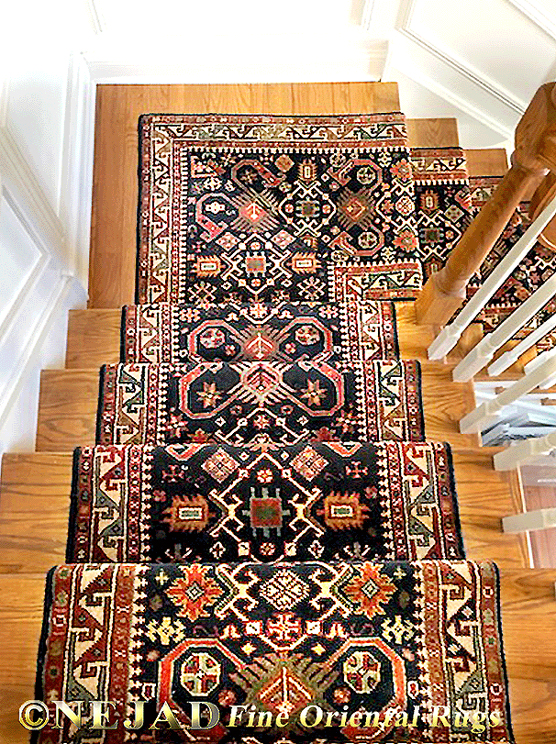
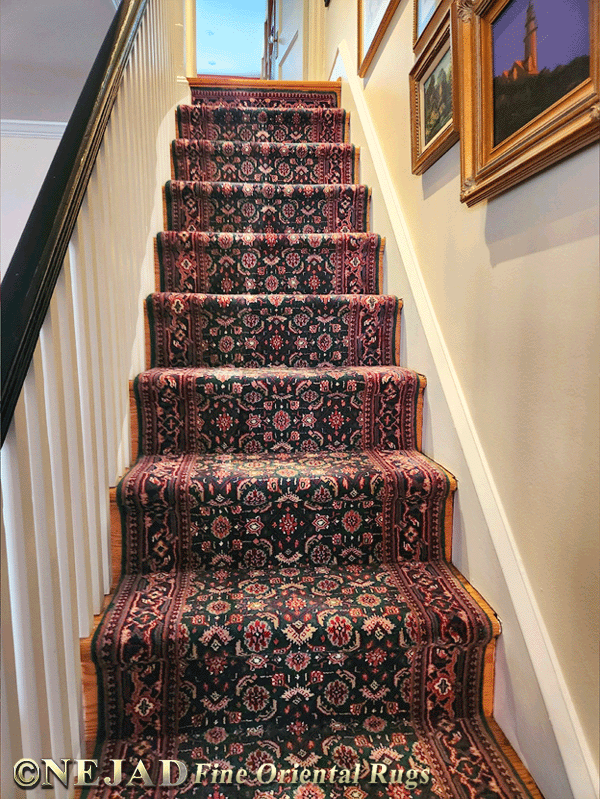
M007NYIY Pepperdil Stair Runner from Nejad’s Signature Heirloom Collection
Geography and Climate
Woodstock has a total area of 44.6 square miles of which 44.4 square miles is land
and 0.27 square miles or 0.63%, is water.The Ottauquechee River flows through the
town. This climatic region – classified as Humid Continental Climate – is typified
by large seasonal temperature differences, with warm to hot summers and notably
cold winters.
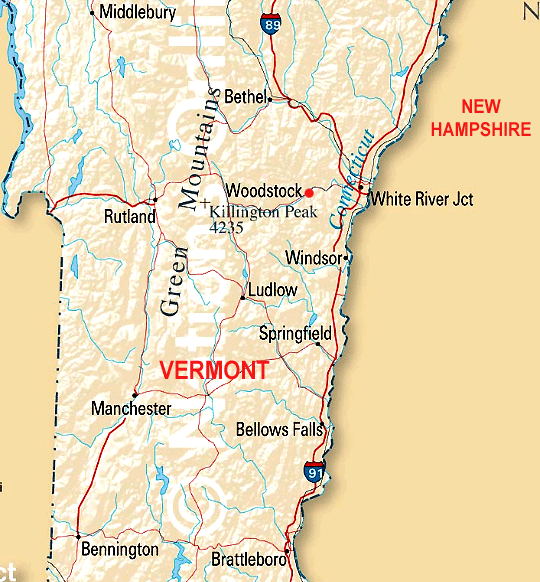
Vermont Map featuring Woodstock, Vermont
Woodstock is a 3-hour drive from Boston and is 250 miles from New York City.
Woodstock is crossed by US Route 4, Vermont Route 12 and Vermont Route 106
and is easily accessible via car or plane to Rutland or Lebanon Airports. The
closest regular public transportation hubs are in White River Junction 12
miles east and Rutland 48 miles west.
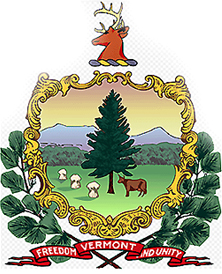
Vermont: Introduction and Historical Highlights
Known as the Green Mountain State, Vermont is located in the New England region of
the Northeastern United States. It borders Massachusetts to the south, New Hampshire
to the east, New York to the west, and Canada to the north. As of the 2020 U.S.
census, the state had a population of 643,503, ranking it the second least-populated
U.S. state and it’s capital, Montpelier, the least populous U.S. state capital.
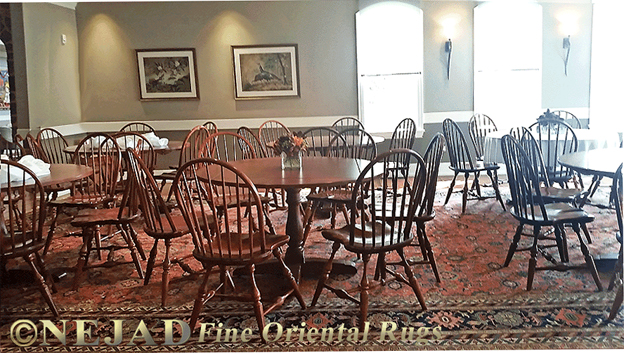
M006RTNY Rustic Mahal oversize Rug from Nejad’s Signature Heirloom Collection
During the 17th century, French colonists claimed the territory as part of the
Kingdom of France’s colony of New France. After the Kingdom of Great Britain began
to settle colonies to the south along the Atlantic coast, the two nations competed
in North America: after being defeated in 1763 in the Seven Years’ War, France
ceded its territory east of the Mississippi River to Great Britain. An approximate
2% remnant of French speakers persists to the present day.
The Battle of Bennington was fought on August 16, 1777. A combined American force
under General John Stark, attacked and defeated the Hessian forces at Hoosick, New
York, just across the border from Bennington. British General John Burgoyne never
recovered from this loss and eventually surrendered the remainder of the 6,000-man
force at Saratoga, New York, on October 17 of that year. The battle of Bennington is
considered a crucial turning point in the Revolutionary War and represents the first
major defeat of a British army. The anniversary of this battle – Bennington Battle
Day – is celebrated in Vermont as a legal holiday.
Post-war – Vermont continued to govern itself as a sovereign entity issuing its own
coinage and operating a national postal service. A petition for statehood was
officially sanctioned and approved by an Act of Congress in 1791 – thus making
Vermont the 14th state and the first state to enter the Union after the original
13. In November of 1858, Under the Act “To Secure Freedom to All Persons Within
This State,” slavery was officially outlawed less than three years before the
American Civil War.